

Every week, another travel blogger discovers the Atlas Mountains, posts stunning photos to Instagram, writes « 10 Hidden Gems in Morocco, » and waits for the sponsorships to roll in.
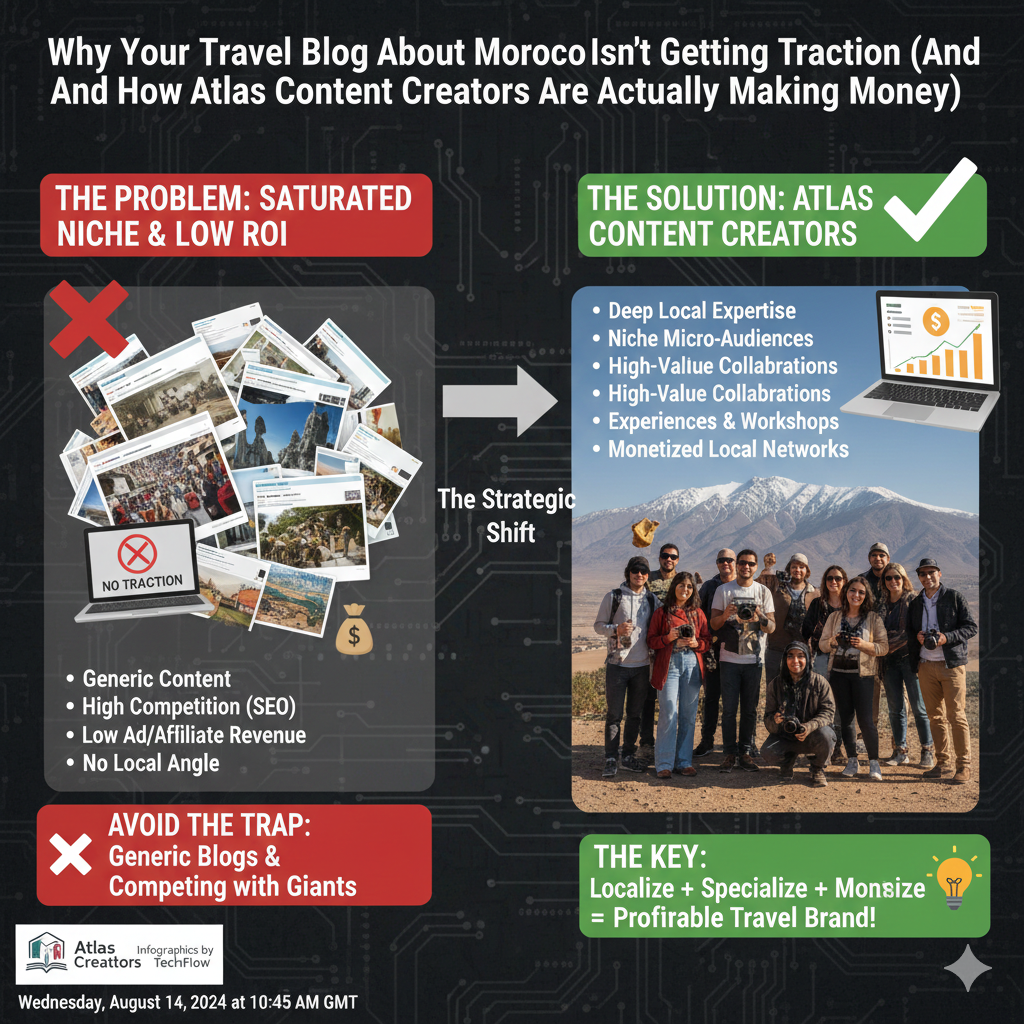
They don’t.
The Atlas region has become a content creator graveyard. Thousands of blogs with beautiful photography, authentic stories, and zero revenue. The pattern is depressingly consistent: 6 months of enthusiastic posting, followed by sporadic updates, then silence.
But a small group of Atlas-focused creators are actually making money. Not influencer money. Real money. €3,000-€8,000 monthly from a combination of affiliate partnerships, content licensing, and strategic brand collaboration.
The difference isn’t photography skills or writing talent. It’s understanding the business infrastructure that turns content into cash.
The Identity Problem Killing Your Growth
You chose a blog name during a romantic moment in Imlil. « WanderlustAtlas, » or « MountainSoulJourney, » or some variation that felt meaningful when you registered the domain.
Then reality arrived:
- The name’s already taken on Instagram, so you’re @WanderlustAtlas_Travel_Morocco (11 followers wonder if you’re a bot)
- Your TikTok is @WanderlustAtlas2024 because someone claimed the original
- Your YouTube is « WanderlustAtlas Official » (the « Official » screams « I’m not official »)
- Your domain is WanderlustAtlas.blog because the .com was taken
This fragmentation destroys trust. Brands researching potential collaborations see the inconsistency and assume you’re an amateur. Readers trying to follow you across platforms can’t find you. Your SEO is split across multiple identities.
Worse, you discover « Wanderlust Atlas » is trademarked by a tour company in Marrakech. They send a cease-and-desist. Now you’re rebranding after 18 months of content creation, losing all your accumulated SEO value and social proof.
Professional content creators validate their brand identity before publishing a single post. They verify the name works across all platforms they’ll eventually need (Instagram, TikTok, YouTube, Pinterest, domain, business registration). They check for trademark conflicts in Morocco and their home country. They ensure the name isn’t too similar to established competitors who will outrank them forever.
This isn’t paranoia—it’s pattern recognition. The creators making money didn’t get lucky with names. They architected their brand identity to scale before they needed it to scale.
The Email List Myth That’s Costing You Money
Every blogging guru says the same thing: « Build your email list! Email subscribers are worth 10x social followers! »
So you add a popup: « Get my FREE Atlas Travel Guide! Subscribe now! »
Then nothing happens. Or worse, something happens:
You get 47 email signups in the first month. You’re thrilled. You send your first newsletter. Five people unsubscribe. Twenty-three don’t open it. The rest open it but don’t click anything.
Then the problems start:
- Tourism companies email your « subscribe » address with partnership spam
- Your inbox fills with « collaboration opportunities » (code for « promote us for free »)
- You get 15 automated responses from people who used fake emails to access your guide
- Someone reports your welcome email as spam, damaging your sender reputation
Your newsletter email—which you planned to use for genuine audience building—is now compromised. But you can’t change it without breaking your signup forms, your email automation, and your credibility with existing subscribers.
Here’s what working creators do differently: they separate their public-facing collection addresses from their actual sending infrastructure. They test different lead magnets (« Atlas Hiking Checklist » vs. « Budget Breakdown: 10 Days in Morocco ») using unique email identifiers for each.
When the « Budget Breakdown » email gets 200 signups but 40% bounce rate (fake addresses), while « Hiking Checklist » gets 80 signups with 95% deliverability and 60% open rates, you’ve just learned which audience actually values your content.
This intelligence is worth thousands. You stop wasting time creating guides nobody reads and double down on what your actual audience will pay for.
The Monetization Gap Nobody Talks About
You’ve built an audience. You’re getting 5,000 monthly visitors to your Atlas travel content. Brands should be throwing money at you, right?
Wrong.
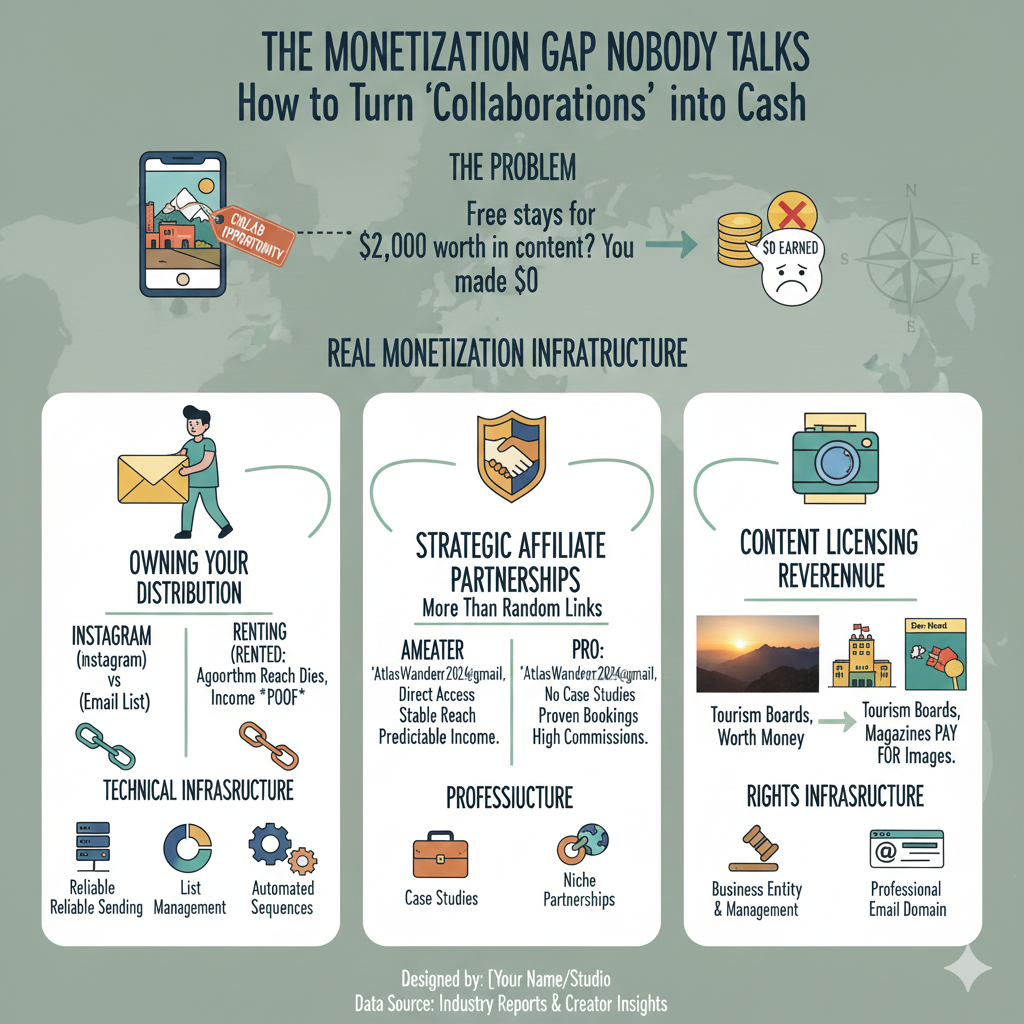
They’re throwing « collaboration opportunities » at you. Code for: « We’ll give you a free night at our riad if you produce $2,000 worth of content, write posts that stay live forever, and grant us unlimited usage rights to your photos. »
You accept because you need content and can’t afford accommodation. You produce beautiful work. It gets decent engagement. The riad owner is thrilled.
You made $0.
Real monetization comes from infrastructure most travel bloggers never build:
Owning your distribution: When your primary platform is Instagram, you’re renting your audience from Meta. They change the algorithm, your reach dies, your income disappears. Creators making real money own their email lists, their websites, their content archives.
But email ownership requires technical infrastructure. You need reliable sending (so your newsletters don’t land in spam). You need list management (so you can segment readers interested in luxury vs. budget travel). You need automated sequences (so new subscribers get your best content without manual work).
Strategic affiliate partnerships: The travel creators earning €5k+ monthly aren’t promoting random booking platforms. They’ve built specific partnerships with Atlas-focused tour operators, gear companies serving trekkers, and accommodation platforms that actually pay decent commissions.
But securing these partnerships requires professional communication. You’re pitching businesses using an email address that looks legitimate, from a domain that matches your brand, with case studies proving you drive actual bookings.
If your pitch email is AtlasWanderer2024@gmail, you’re dead on arrival. Professional partnerships require professional infrastructure.
Content licensing revenue: Your photo of sunrise over Toubkal is worth money. Tourism boards want it. Hotels need it. Travel magazines will pay for it.
But licensing requires clean rights management. You need a business entity to invoice through. You need contracts that protect your work. You need a professional email domain that doesn’t scream « amateur photographer who doesn’t understand licensing. »
The Technical Debt Strangling Your Growth
Every month you delay fixing your infrastructure, you accumulate technical debt:
- SEO debt: Your sitemap is a mess. Search engines can’t properly index your Atlas hiking guides because you never organized them into clear categories. Competitors with worse content but better site structure outrank you.
- Email debt: You’ve been using the same public email for everything. It’s now associated with 40 different platforms, 15 newsletter signups, and countless vendor communications. When one of those platforms gets breached (they will), your entire digital identity is compromised.
- Brand debt: Your inconsistent naming across platforms means every new follower is a coin flip. Will they find your YouTube? Your blog? Your Instagram? Each fragmented identity splits your authority and confuses both audiences and algorithms.
Successful Atlas creators didn’t avoid this debt because they’re smarter. They avoided it because they set up boring infrastructure before they needed it:
- Clean email architecture: Separate addresses for public signups, business partnerships, platform registrations, and vendor communications. When one gets compromised, the others remain secure.
- Proper site structure: XML sitemaps that help Google understand their content hierarchy. Category pages that rank for « Atlas trekking guides » while individual posts target « 3-day Toubkal itinerary. »
- Verified brand consistency: Same name across all platforms because they validated availability before committing. Trademark clearance so they don’t rebrand after building an audience.
What This Actually Looks Like
The Atlas creators making money aren’t doing anything magical. They’re doing the boring work consistently:
Month 1-2: Validate brand identity, secure all platform handles, set up email infrastructure with proper authentication, and build an organized site structure.
Month 3-6: Create content consistently while testing what resonates, use separate email addresses to track which lead magnets attract quality subscribers, optimize site for search engines to index properly.
Month 7-12: Approach brands with professional infrastructure, pitch affiliate partnerships from business email domains, license content through legitimate business entities, and automate email sequences so new subscribers get value without manual work.
Month 12+: Compound returns from infrastructure investment—organic search traffic from properly indexed content, affiliate revenue from trusted partnerships, licensing income from professional brand presence, audience growth from clean email deliverability.
The competition is still using @gmail addresses and wondering why brands don’t take them seriously. They’re posting stunning content to platforms they don’t own, building audiences that disappear when algorithms change.
You could be different. You could build infrastructure that turns content into actual income. You could validate your brand before you’re forced to rebrand. You could set up email systems that separate signal from noise.
The Atlas Mountains will keep producing stunning content opportunities. The question is whether you’ll build the business infrastructure to actually monetize them.
The cameras and creativity are the easy part. Everyone has those. What separates hobbyists from professionals is the boring backend work nobody photographs for Instagram.
Your choice: keep creating beautiful content that generates beautiful engagement and ugly bank statements, or spend the next 30 days building infrastructure that turns your passion into sustainable income.
The mountains aren’t going anywhere. But your window to claim your niche before it’s saturated definitely is.