
The Atlas Mountains have never been more attractive to entrepreneurs. While Marrakech and the Sahara dominate tourist attention, the Souss-Massa region offers something increasingly rare: authentic experiences that haven’t been Instagram-filtered into oblivion.
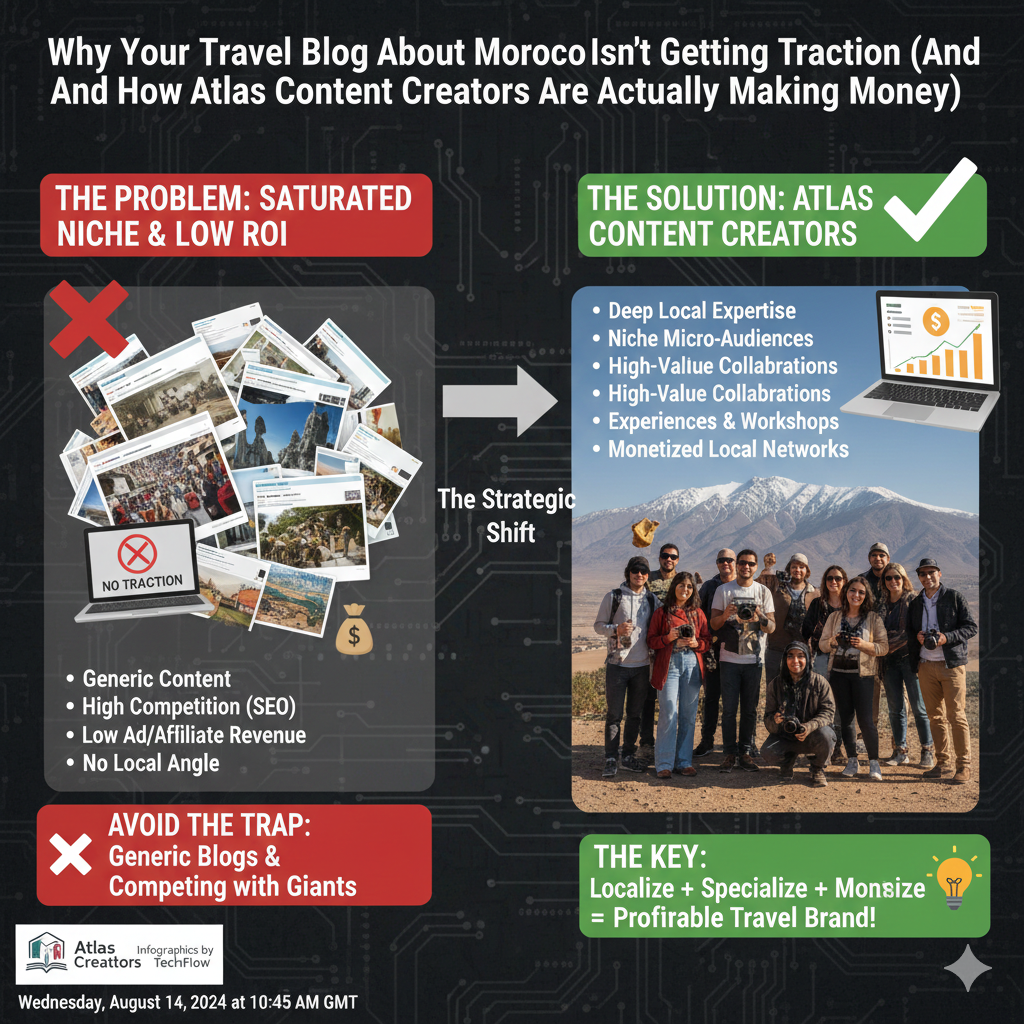
But here’s the problem most aspiring tourism entrepreneurs face: the gap between « I want to start a mountain tour business » and actually having guests checking into your riad is filled with a thousand small decisions that can make or break you before you begin.
The Three Phases Every Atlas Tourism Venture Goes Through
Whether you’re a Moroccan returnee with family land or a European expat who fell in love with the region, your journey follows a predictable pattern. Understanding these phases helps you avoid the expensive mistakes that shut down 60% of new tourism businesses within two years.
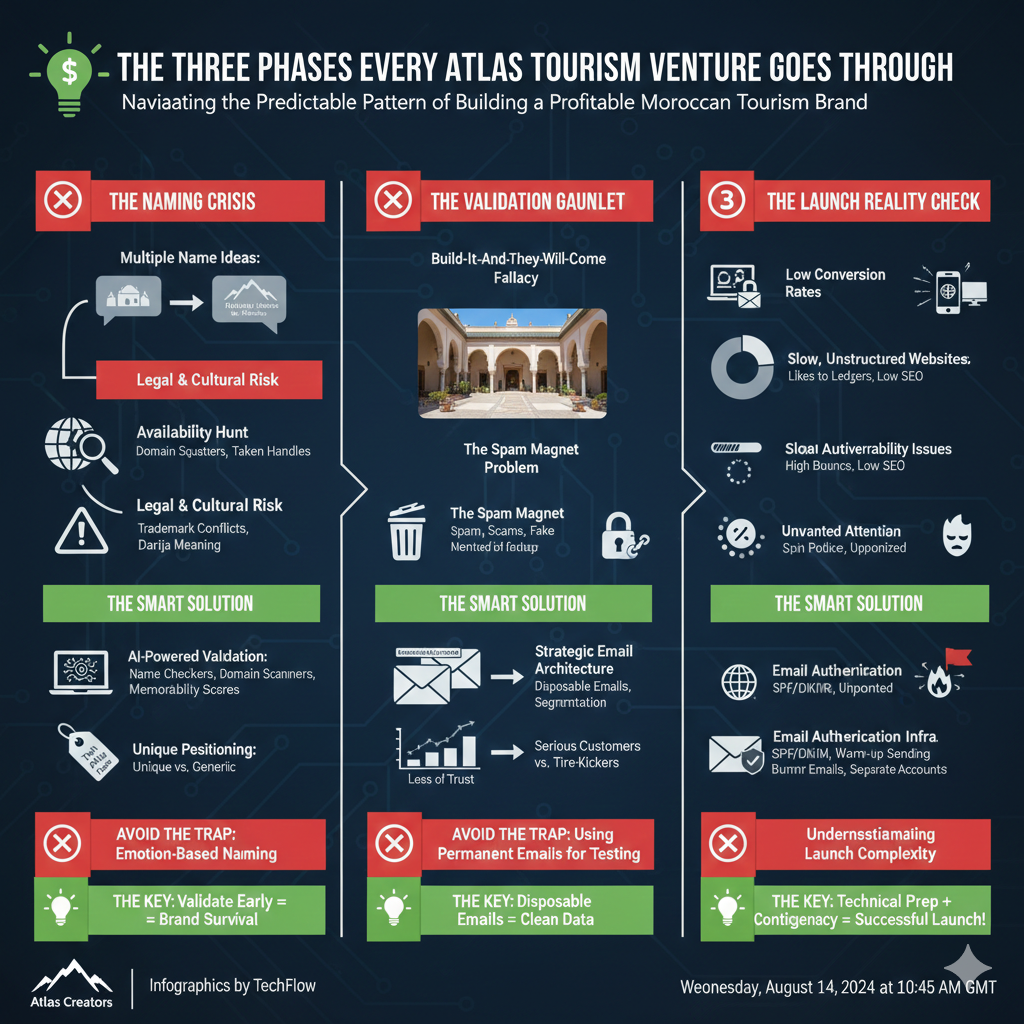
Phase 1: The Naming Crisis
You need a business name that works across cultures. Your Amazigh grandmother suggests « Tigmi n’Atlas » (House of Atlas). Your European partner wants « Mountain Escape Morocco. » Your marketing consultant says both are « too generic. »
This isn’t vanity—it’s survival. Your business name appears on booking platforms, Google Maps, Instagram handles, bank accounts, and Moroccan business registrations. Change it later and you lose SEO rankings, social proof, and legal continuity.
The real challenge: most great names are already taken. That perfect .com domain? Registered in 2008 by a domain squatter in Arizona asking $4,000. The Instagram handle? Claimed by an abandoned account with 47 followers.
Smart entrepreneurs now validate names before falling in love with them. They check if the business name creates trademark conflicts with existing Moroccan tourism operators. They verify the name doesn’t accidentally mean something unfortunate in Darija or French. They ensure the name works phonetically when French tourists try to pronounce it over the phone.
This validation process used to require hiring legal counsel and trademark researchers. Now, AI-powered tools analyze naming conflicts, check domain availability across extensions, and even predict how memorable a name will be to your target demographics. The difference between « Atlas Adventure » (3,000 Google competitors) and « Tajin Trail Atlas » (unique positioning) can determine whether you ever break through the noise.
Phase 2: The Validation Gauntlet
You’ve got your name. Now comes the hardest question: will anyone actually pay for what you’re offering?
The Atlas region has dozens of failed tourism ventures. Beautiful riads with no guests. Adventure tour companies with professional websites and zero bookings. The pattern is always the same: someone built what they thought tourists wanted instead of validating what tourists actually pay for.
Validation isn’t about surveys or focus groups. It’s about getting real email addresses from people willing to hear about your launch. Not your friends. Not your Facebook acquaintances. Strangers who match your customer profile.
Here’s where most founders create an expensive problem. They set up a « Coming Soon » landing page with a permanent business email address to collect launch interest. This email immediately starts receiving:
- Spam from SEO agencies in India promising « first page Google rankings »
- Moroccan vendors pitching wholesale argan oil partnerships
- Cryptocurrency scams in broken English
- Fake booking inquiries designed to extract deposit payments
Within weeks, your business email is compromised. The professional address you planned to use for bank communications, booking confirmations, and supplier relationships is now a spam magnet. Changing it means updating registrations, reprinting materials, and confusing early customers.
The solution isn’t better spam filters—it’s strategic email architecture. Forward-thinking entrepreneurs use disposable email addresses during the validation phase. They test different marketing channels (Instagram ads vs. Reddit travel communities vs. partnerships with European tour operators) and assign each channel a unique email identifier. When one gets compromised or proves low-quality, they kill it without affecting their core business communications.
This approach reveals which marketing channels attract serious customers versus tire-kickers. If your Facebook ad campaign email receives 200 messages but only 3 turn into paid deposits, while your partnership email gets 15 inquiries with 8 conversions, you’ve just learned where to allocate your limited marketing budget.
Phase 3: The Launch Reality Check
You’ve validated demand. You have 200 email addresses from people who clicked « notify me at launch. » Now you need to convert interest into bookings before your runway evaporates.
This is where the gap between « likes » and « ledgers » destroys businesses. Those 200 emails represent potential customers at wildly different stages:
- 40% will never open your launch email (wrong address, changed their mind, forgot who you are)
- 35% will read it but do nothing (still researching, not ready to book)
- 20% will visit your booking page but bounce (price, dates, trust issues)
- 5% will actually complete a booking
To survive launch, you need every advantage. That means:
Professional web presence that loads fast: Tourists booking Atlas excursions aren’t patient with slow websites. They’re comparing you against 12 other tabs. Your sitemap needs to help search engines index your tours, accommodations, and region-specific content before competitors outrank you.
Google doesn’t care about beautiful design—it cares about crawlable structure. Tourism sites that properly organize their sitemaps (region pages, activity categories, seasonal offers) get indexed 3x faster than those treating sitemaps as an afterthought. When someone searches « 3-day Atlas trekking Toubkal, » being on page one versus page three is the difference between bookings and bankruptcy.
Email deliverability you can trust: You’re sending launch announcements to 200 people who opted in. But if your email domain is new, has no sending reputation, and suddenly blasts 200 messages, Gmail and Outlook will flag you as spam. Your carefully crafted launch offer lands in junk folders, unopened and unconverted.
Established businesses solve this with dedicated sending infrastructure. New ventures can’t afford that yet. The workaround is understanding email authentication (SPF records, DKIM signing) and warming up your sending reputation gradually rather than going from zero to 200 overnight.
Crisis management infrastructure: Your launch will attract attention—some of it unwanted. Competitors may sign up with fake emails to monitor your pricing. Scammers will test your payment forms. Trolls will leave one-star Google reviews before you’ve served a single guest.
You need email addresses you can burn without consequences. Addresses for handling vendor applications (many will be spam). Addresses for platform registrations that might get breached. Addresses for testing your own booking flow without polluting your analytics.
The Unsexy Truth About Tourism Success
The Atlas Mountains will sell themselves. The sunrise over Toubkal, the tea with Berber families, the silence of the valleys—these experiences create themselves.
Your job isn’t to manufacture magic. It’s to build systems that let customers discover you, trust you, and pay you before they experience that magic.
This means:
- Names that work across languages and platforms (because « Dar Amazigh Authentique » might be poetic but it’s a nightmare for Americans to spell in booking forms)
- Email infrastructure that separates signal from noise (because losing a €2,000 group booking in a spam folder ends businesses)
- Web presence that search engines can actually index (because even the best tours are worthless if no one finds them)
The entrepreneurs succeeding in Atlas tourism aren’t those with the best mountain access or the most authentic experiences. They’re the ones who solved the boring infrastructure problems before their first guest arrived.
Your competition is still arguing about whether their logo should be green or blue. You could be validating demand, building clean email workflows, and ensuring Google can actually find your booking pages.
The mountains aren’t going anywhere. The question is whether your business will still be around when the next wave of conscious travelers starts searching for alternatives to overtouristed Marrakech.
The window is open. The tools exist. What you do in the next 90 days will determine whether you’re serving guests next season or explaining to family members why the dream didn’t work out.